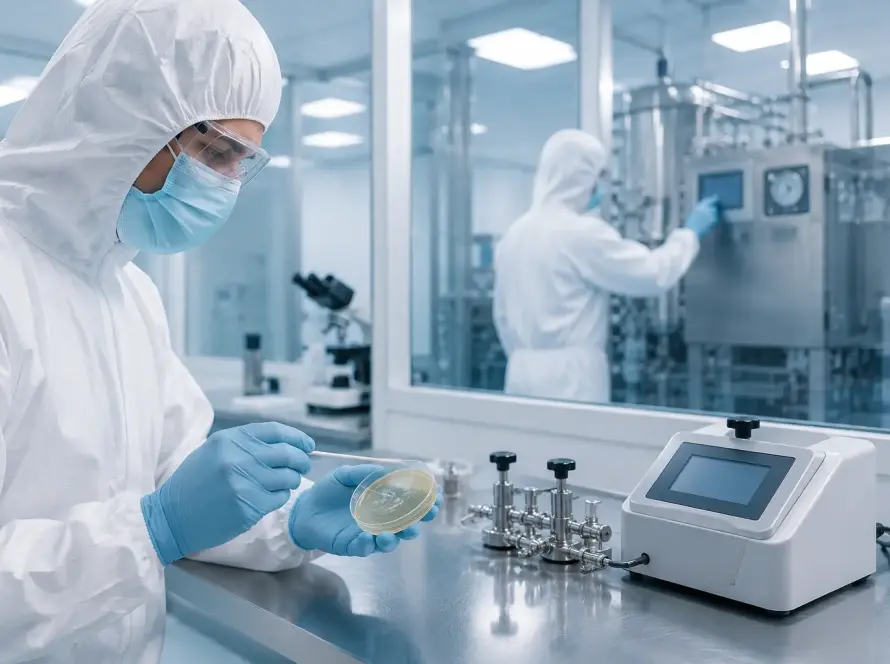
GMP (Good Manufacturing Practice) is a set of quality and cleanliness standards that define boundaries around the quality and sterilisation needs of pharmaceutical equipment. Each piece of equipment must adhere to standards to comply with GMP. In such cases, equipment inspection plays a vital role in helping medical facilities comply with GMP through effective cleaning and its verification.
In this comprehensive blog, we will discuss the role of equipment inspection in ensuring compliance with GMP and how advanced detection tools are helping facilities to follow GMP standards.
Why Equipment Inspection Matters for Pharmaceutical GMP Compliance
Identifying Equipment Deterioration
Equipment inspection ensures that the equipment used in pharmaceuticals is free of flaws. It checks for corrosion, cracks, wear, leaks, and other defects that cause hygiene and performance problems. If inspection is not a regular practice, the equipment compromises efficacy, patient safety, and pharmaceutical GMP compliance.
Preventing Contamination Risks
To comply with GMP requirements, each piece of equipment used for medical purposes should be completely sterile. Equipment inspection checks every area of the equipment that may attract residue, buildup, and other forms of contamination. If not done, equipment can trap residue, harbour microbes, and cause cross-contamination, reducing performance and hampering patient safety.
Supporting Preventive Maintenance
Performing regular equipment checks lets inspectors identify flaws such as cracks, corrosion, and contamination early before they turn into major issues. Further, the maintenance team can plan corrective actions rather than relying on reactive repairs, preventing the facility from GMP compliance violations.
Maintaining Consistent Manufacturing Conditions
Feedback received from regular equipment inspection offers production teams the opportunity to align the medical product design to be compliance-ready. The process also enhances the life and efficacy of the product and provides more room for manufacturing accurate, contamination-free, and quality medical equipment.
Mitigate the chances of violating GMP standards, which can lead to a product halt
Key Pharmaceutical Inspection Procedures to Follow
Visual Inspection
Visual inspection is usually one of the initial parts of the inspection process. Staff can check for cracks, corrosion, deposits, leaks, damaged surfaces, any loose parts and signs of deterioration.
Useful but not foolproof, visual inspection should not be the means of approving that equipment is free from defects.
Surface and Equipment Condition Checks
Surfaces that are in contact with process material require special attention. Inspectors should check for deterioration, residue, surface damage, corrosion, or conditions that may hamper effective cleaning. Other equipment parts, such as connections, seals, and joints, should also be evaluated, if applicable, to eliminate the risk of compliance violations.
Non-Destructive Testing (Where Applicable)
Non-Destructive Testing (NDT) provides additional information when the visual inspection is not enough. Depending on the equipment type and the suspected defect, suitable NDT techniques can locate structural or material defects without damaging the component.
Inspection of Hard-to-Reach Areas
Routine inspections may be more challenging for joined, welded, connected, internally enclosed, sealed or internal surfaces. However, these areas do not have to be considered low-risk just because they are hard to reach. To ensure a high level of hygiene in the pharmaceutical industry, special inspection tools, such as the BioDtex Lamp and BioDtex Scope, can provide extended visibility and help determine where further cleanliness is needed.
Documentation and Reporting
Findings from the inspection should be documented uniformly. Reporting can include defects observed, equipment condition, areas inspected, photos or evidence, and recommended corrective action. Having good documentation improves traceability and makes it easier for the maintenance and quality team to follow up on any identified issues.
How Regular Inspections Support GMP Compliance
Early Detection of Equipment Defects
The initial stage of a developing crack or damaged surface can have little impact on production. However, it can get worse if neglected. Routine check-ups can help detect the issues before they impact operations, supporting GMP compliance.
Better Contamination Control
Inspection can detect residue build-ups, corrosion, surface damage, and other issues that can make the equipment more difficult to clean or maintain. This can help in contamination control by focusing on possible problem areas.
Support for Preventive Maintenance
The findings of the inspection are helpful for maintenance planning. Rather than replacing parts only when they break, teams can make decisions based on inspection results to decide when they should be repaired, replaced, or monitored more closely.
Improved Documentation
Regular inspection records provide evidence of equipment condition and provide a traceable history. This can be helpful for organisations to show that equipment is being evaluated systematically and issues are identified and rectified.
Reduced Risk of Unexpected Downtime
When equipment or machinery breaks down, it can cause production delays, emergency repairs, and even more expenses. If defects are identified during scheduled inspections, teams can decide when and how to fix them.
Why Advanced Inspection Tools Can Strengthen Hygiene Monitoring
Traditional visual checks are still effective, but they cannot detect all hygiene issues. Residues or other contamination may not be easily visible in the light, especially within joints, corners, crevices and other difficult-to-reach areas.
An advanced visual tool integrated with UV-based technology can aid in identifying nearly all residues or fluorescent materials. With the help of these types of cleaning validation tools in pharmaceuticals, staff can identify areas that need to be cleaned and/or inspected more carefully.
Supporting Pharmaceutical Hygiene Inspection with BioDtex
BioDtex is a leading manufacturer of advanced UV-based hygiene monitoring tools to help meet the cleaning validation requirements of GMP for the pharmaceutical industry.
They offer two specialised tools:
1. BioDtex Lamp
The BioDtex lamp is a UV-based hygiene validation tool that reveals contamination and lets staff know the cleanliness status of equipment. The tool is ergonomically designed with a long-lasting battery and 16 UV-A LEDs to detect nearly all contamination, including biofilms. It is highly suitable for verifying cleanliness in pharmaceutical water systems.
2. BioDtex Scope
BioDtex Scope is another advanced hygiene monitoring tool specially designed to detect contamination in hard-to-reach areas. Pharmaceutical facilities that manufacture hollow or pipe-like structures with a 1 to 8 cm diameter can leverage the tool to verify cleanliness and ensure compliance with GMP.
The tool offered by BioDtex can support cleaning verification and hygiene monitoring by helping teams identify potential problem areas earlier. Used alongside established GMP procedures, validated cleaning processes, and appropriate testing, BioDtex solutions can contribute to a more systematic approach to equipment hygiene in the pharmaceutical industry.
Conclusion
Pharmaceutical facilities are subjected to strict hygiene practices, and GMP compliance ensures every piece of medical equipment is free of contamination and safe to use. So, don’t let your production come to a halt due to GMP compliance violations. BioDtex’s advanced technology-equipped tools are helping the pharmaceutical industry comply with GMP and ensure uninterrupted production and sales. Explore BioDtex solutions!
To Comply with GMP, Don’t Just Rely on Standard Cleaning Methods
FAQs
Pharmaceutical GMP compliance is a set of documented rules to ensure every piece of medical equipment is free of contamination and safe to use for the patient. It is important because the use of contaminated medical tools can harm the patient’s health and interrupt recovery.
GMP compliance states that every piece of medical equipment must be thoroughly cleaned before reaching the end user. Regular equipment inspections check for cracks, corrosion, residues, and buildups through specialised cleanliness verification tools. The regular inspection process ensures facilities stay compliant with GMP.
GMP requirements for pharmaceutical equipment inspection include hygienic surfaces and no dead zones where contamination can be trapped. The requirements also include validated cleaning through specialised tools like the BioDtex Lamp and microbiological tests.
For GMP validation, pharmaceutical equipment inspection is performed based on how prone the equipment is to attract contamination. Apart from that, each piece of equipment should undergo inspection every 3 to 6 months.