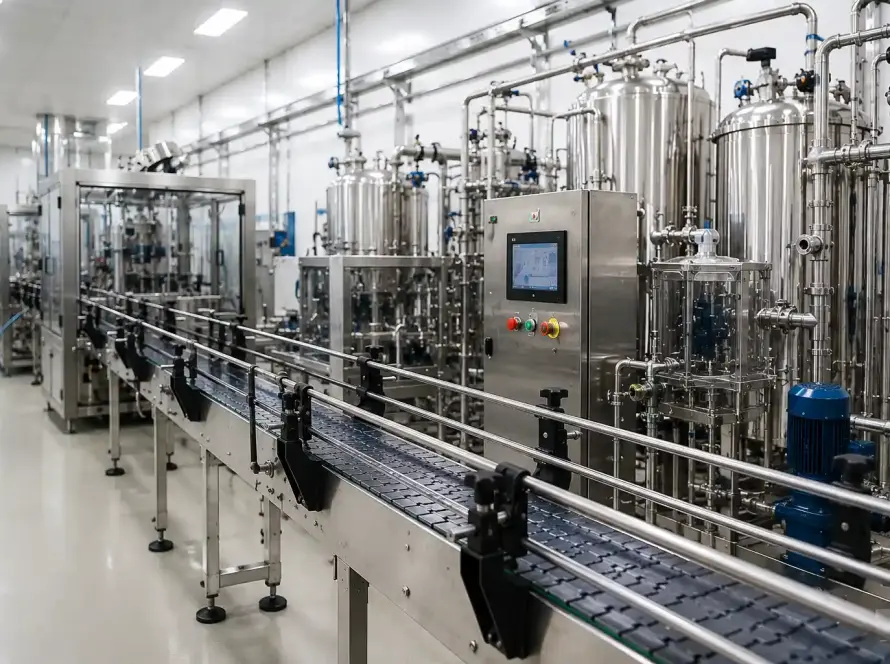
Food contact surfaces are the core of any production process. Residues and early microbial growth can remain after cleaning in locations that appear acceptable under normal lighting. Routine visual checks frequently miss this material, increasing the risk of product contamination. Combining more effective detection methods with structured prevention measures allows facilities to reduce carry-over and maintain more consistent hygiene standards across shifts.
In this blog, we will explore what hidden contamination on food surfaces is, common causes, and how to detect it through advanced solutions.
What Is Hidden Contamination on Food Contact Surfaces?
Hidden contamination on food contact surfaces refers to residual organic matter, biofilms or microbial material that remains after cleaning. Typical food contact surfaces include conveyor belts, mixers, fillers, cutting boards, tanks, pipes and processing utensils. The deposits and the early stages of microbial growth often settle into these food contact surfaces. As a result, complex geometry and limited access to confined spaces limit the standard visual inspection from revealing everything present.
Strengthen your cleaning verification.
Common Causes of Food Contact Surface Contamination
Several operational factors allow food contact surface contamination to persist even when cleaning appears complete.
Incomplete Cleaning
Manual cleaning often leaves certain zones unaddressed. Operators may concentrate on open, visible surfaces while overlooking less obvious locations, allowing residual material to remain between production runs.
Hard-to-Reach Equipment Areas
Seals, corners, joints and narrow gaps collect residue readily and resist both cleaning tools and visual examination. When these areas are not deliberately scheduled for cleaning, they become recurring sources of residual material.
Inadequate Cleaning Procedures
Incorrect methods, insufficient contact time or improper chemical application reduce effectiveness. Unclear or inconsistently applied procedures increase the likelihood that residues survive the sanitation cycle.
Biofilm Formation
Persistent residues provide a surface for microbial attachment and growth. Over time, this can lead to biofilm, a structured community protected by a matrix that resists ordinary cleaning and disinfection. Early residual material therefore contributes directly to longer-term hygiene challenges. That’s why facilities seeking clearer insight frequently adopt highly advanced biofilm inspection approaches.
Cross-Contamination
Inadequate hygiene practices can transfer contaminants from one surface or processing stage to another. Shared tools, incomplete hand hygiene or unrestricted movement between zones spread material that then settles on food contact surfaces.
How to Detect Hidden Contamination on Food Contact Surfaces
Checking whether a surface simply looks clean is insufficient. A combination of methods provides a more reliable assessment of hygiene status.
Visual Inspection
Visual checks remain the starting point. Teams examine accessible surfaces for residues, stains and obvious buildup. The limitation is clear: thin films, material in shadowed areas and residues in confined spaces often go unnoticed under normal lighting.
UV-Based Inspection
Suitable UV inspection tools make residues more visible through fluorescence. When directed at cleaned surfaces, the light causes organic matter and residual films to glow, helping teams identify locations that require additional cleaning or further investigation. This supports more thorough cleaning verification in food processing without replacing other testing methods.
ATP Testing and Microbiological Testing
ATP testing offers a rapid indication of residual organic material by measuring adenosine triphosphate (ATP). It can detect specific organisms or indicator groups through sampling and laboratory analysis.
Cleaning Verification
Structured cleaning verification in food processing converts individual findings into sustained improvements. Results can be recorded, compared over successive cycles and used to refine procedures. Recurring problem areas become apparent, allowing teams to adjust methods, focus or frequency.
Each method assesses different aspects of contamination. Facilities select the combination that aligns with their hygiene programme, risk profile and regulatory requirements.
How to Prevent Hidden Contamination on Food Contact Surfaces
Prevention depends on clear systems, consistent application and regular review.
Establish Detailed Cleaning SOPs
Written procedures should define cleaning methods, chemical selection, contact times, frequency and responsibilities. Consistent application of documented steps reduces variability and lowers the chance that residual material is overlooked.
Focus on Hard-to-Reach Areas
Equipment joints, seals, corners and enclosed sections require explicit inclusion in cleaning schedules. Allocating appropriate time and tools to these zones reduces the accumulation of residual material.
Introduce Routine Cleaning Verification
Combining visual checks with UV-based inspection creates a more complete verification process. Regular application confirms cleaning effectiveness and identifies gaps promptly.
Train Hygiene Teams
Personnel need a clear understanding of both cleaning procedures and the verification methods used to assess them. Practical training improves consistency and helps operators recognise why certain areas require additional attention.
Record and Analyse Inspection Results
Documenting findings across successive cycles reveals patterns. Areas that repeatedly show residual material can then be addressed through revised procedures, additional tools or equipment adjustments. Analysis converts separate observations into practical improvements.
Insepct Equipment Regularly
Damaged seals, cracks, worn surfaces and similar defects hinder effective cleaning. Routine equipment inspection identifies these conditions before they become persistent sources of residual material.
How BioDtex Supports Food Processing Hygiene Verification
We have two highly advanced hidden contamination detection tools to support food processing hygiene verification:
The BioDtex Lamp is a handheld UV-A device that helps teams identify residues that are not usually visible under normal lighting. It is used during hygiene inspections and post-cleaning checks to provide an additional visual layer that highlights organic material and supports more targeted follow-up.
The BioDtex Scope extends inspection into difficult-to-access sections of processing equipment. Joints, seals, internal surfaces and other restricted locations become easier to examine, allowing visual assessment beyond easily reachable areas.
Together, these tools support a more systematic approach to identifying potential hygiene gaps and can form a useful element of a wider cleaning verification programme.
Conclusion
Hidden contamination on food contact surfaces remains a practical challenge because residues and early microbial growth frequently escape routine visual checks. Effective detection combines visual inspection with UV-based methods. When these elements operate together, facilities reduce the risk of carry-over and maintain more consistent hygiene standards across production.
BioDtex offers advanced tools for biofilm detection across industries. Our tools are made using advanced technology and high-end sensors. This ensures that every hidden contamination is detected. Contact us now!
See how BioDtex supports hygiene inspection
FAQs
It refers to residual organic matter, product films or microbial material that remains after cleaning but is not readily visible under normal lighting. It often settles in joints, seals or other confined locations.
Material can accumulate in hard-to-reach areas and remain undetected by ordinary visual checks alone. Also, complex geometry, limited access, incomplete cleaning and persistent residues all contribute to making food contact surfaces at risk of hidden contamination.
Residual material can transfer to product, support microbial growth and contribute to biofilm development. This increases the risk of contamination events, quality issues and potential product recalls.
UV hygiene inspection lamps cause certain residues to fluoresce under UV light, making organic material more visible. Teams can then locate areas that still require cleaning or further investigation after sanitation.
Establish detailed cleaning SOPs, prioritise hard-to-reach areas, introduce routine cleaning verification, train hygiene teams, record and analyse results, and inspect equipment regularly for conditions that hinder effective cleaning. By doing these, facilities can prevent contamination on food-contact surfaces.